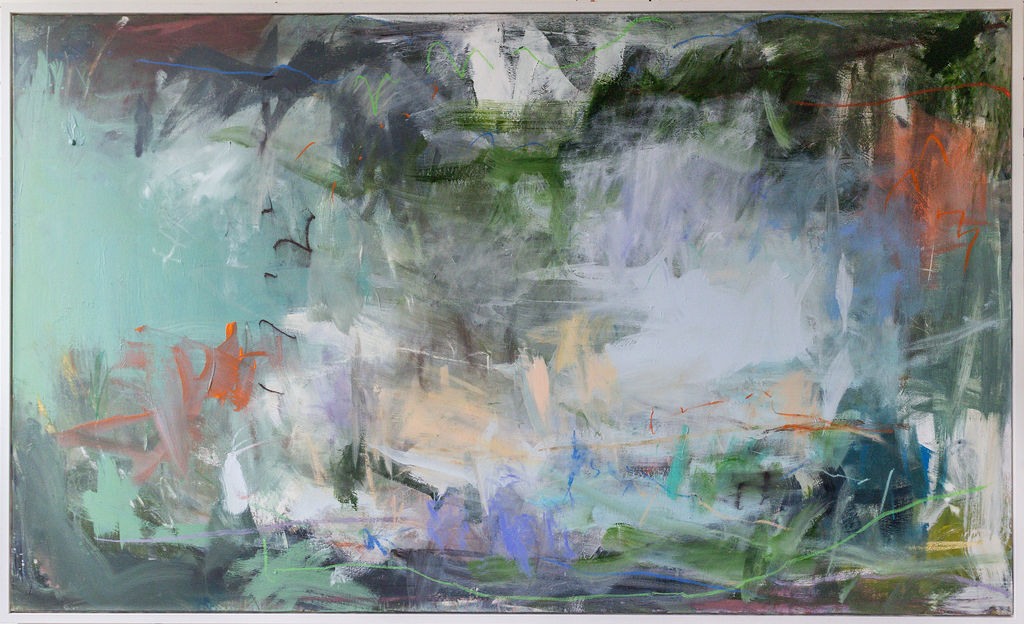
The Art of Expression: Bethany Holmes
An Interview with Bethany Holmes on Creativity, Inspiration, and Luxury Spaces
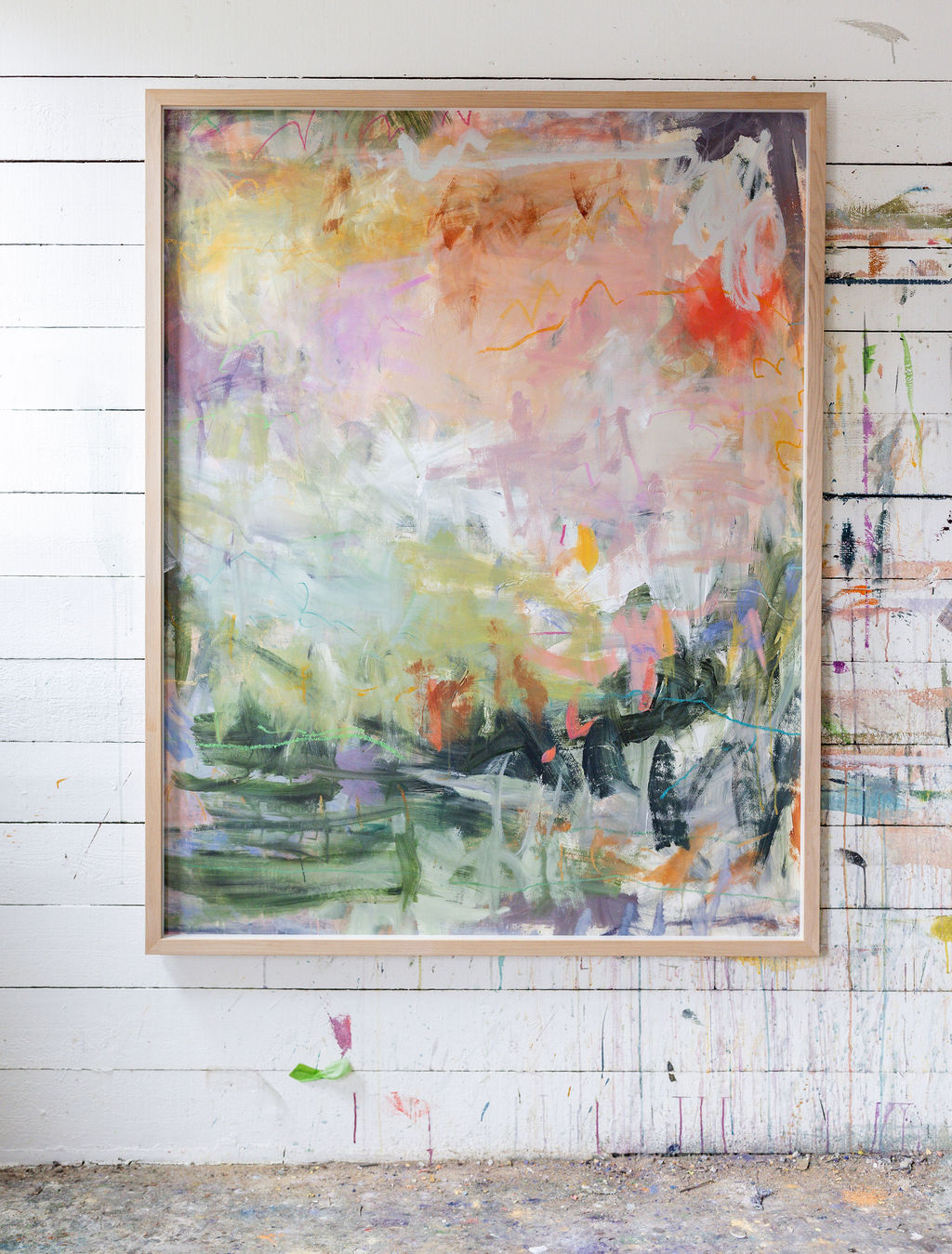
Bethany Holmes is a contemporary artist whose expressive mixed-media paintings are defined by their bold use of colour and dynamic textural depth. With a background in textile design, she has developed a distinctive approach to painting that embraces layering, instinctive mark-making, and an intuitive understanding of composition. Her ability to create harmony between rich, sophisticated palettes and tactile surfaces results in immersive works that exude both energy and refinement. Bethany’s pieces are sought after for high-end hospitality spaces, where their striking presence enhances carefully curated interiors.
In this exclusive interview for Artstory Bethany offers insight into her creative process, sharing how her love of colour drives her work and shapes her unique aesthetic. She discusses her artistic evolution and her thoughts on contemporary art’s growing influence in luxury interior design. With her work featured in prestigious collections around the world, Bethany’s perspective provides a fascinating look at the synergy between fine art and hospitality.
Q: Can you share a bit about your background and what led you to pursue a career in art?
I’ve always been creative, but I never really knew where I fit in the creative world. During my textile design degree, it wasn’t until my third year that I truly found my rhythm. I had a tutor who encouraged me to break away from expectations and just create. She pushed me to experiment—to paint in the dark, to work on a bigger scale, to embrace the unexpected. That changed everything for me. It made me see that creativity wasn’t about ticking boxes but about trusting my instincts.
When I started working at Romo, I learned so much about colour—it was a huge influence. One day, they asked me to do a painting for a photo shoot, and from there, things started to shift. People saw the painting and kept saying, “You should do more of this.” At the time, I was living in a rented flat, and the artwork in there wasn’t really my style, so I thought, why not make my own? It was a break from my day job, where I was constantly painting flowers, and it reminded me how much I loved creating for myself.
As I kept painting, it just grew. I moved to a little cottage with a spare room, and that became my studio. People started asking for commissions, and I just kept going. Then there was a turning point—I applied for a job in London and didn’t get it, which really threw me. But in hindsight, it was the best thing that could have happened. It made me think, “Sod it, people clearly like what I’m doing, so why not go all in?” That’s when I really committed to my art, and I haven’t looked back since.
Q: Nature and the British countryside have been evident themes in your work. What specific aspects of these inspire you the most?
I wouldn’t say nature and the countryside are themes in my work—they’re just my way of life. Moving to a rural area completely changed how I felt. I was never comfortable in a city or a town; I liked visiting, but living there made me miserable. When I was in that flat in Nottingham, I had so much anxiety, I kept thinking I was ill when I wasn’t. But as soon as I moved to Hoveringham, everything felt right. I remember the estate agent being surprised that, at 24, I wanted to move there alone. She even suggested I try somewhere with more going on, but that wasn’t me. That cottage, that quiet but connected village life—it just made me happy.
It’s not just about the scenery; it’s the rhythm of rural life that has influenced my work. Getting a dog has played a big part in that too. I always wanted one, and once I had him, I had no choice but to be outside every day, walking in all seasons, seeing the same places constantly change. You don’t always realise it, but when you’re someone who notices things—the colours, the patterns—they stay with you. It all sinks in subconsciously, and then suddenly, in the studio, it comes out in my work. I’m not painting landscapes, but those experiences filter through in ways I don’t always expect.
Q: Colour plays a significant role in your paintings. How do you select your palettes, and what does colour represent in your work?
I never plan a palette—I never know where it’s going. When I get into the studio, the first thing I do is mix a couple of colours before I even start painting. It’s instinctive, but I think my background in textile design gave me the biggest lesson in understanding how colours work. I know exactly what needs adjusting—whether a mix needs a touch more black, if it’s too yellow, or if it needs a bit of red. That precision has stayed with me, and I’m meticulous about it in the studio. If I rush mixing a colour and put it on too quickly, I can tell immediately that it’s wrong. As soon as it hits the canvas, I just know—it doesn’t work, and it has to come off.
There are also colours you’re just naturally drawn to, and sometimes you don’t even know why. I think that’s part of the process—following that instinct and letting it lead the work. Colour is such a powerful force in a painting, and it carries so much weight in how a piece feels. For me, it’s about balance, intuition, and knowing when something is right.
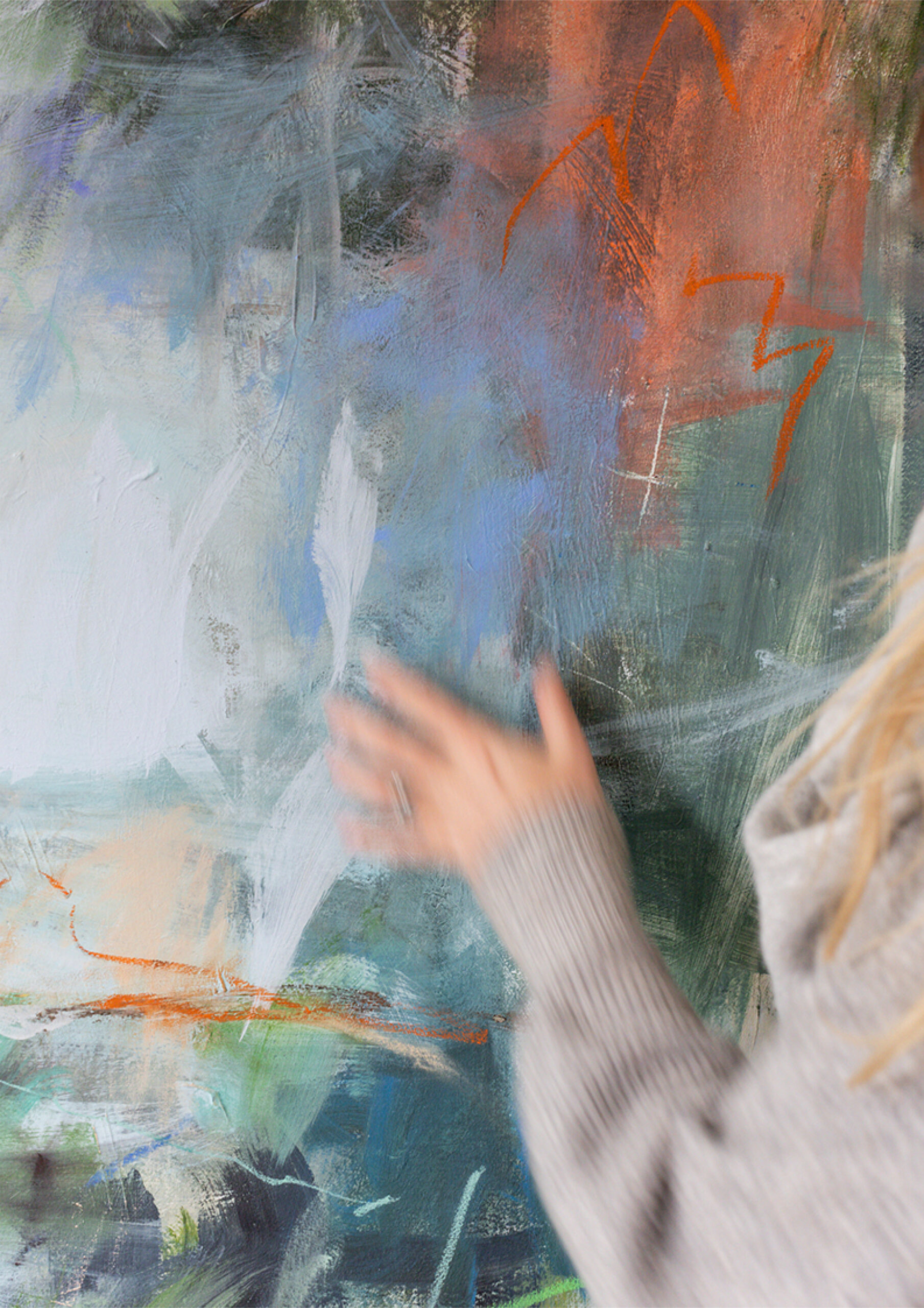
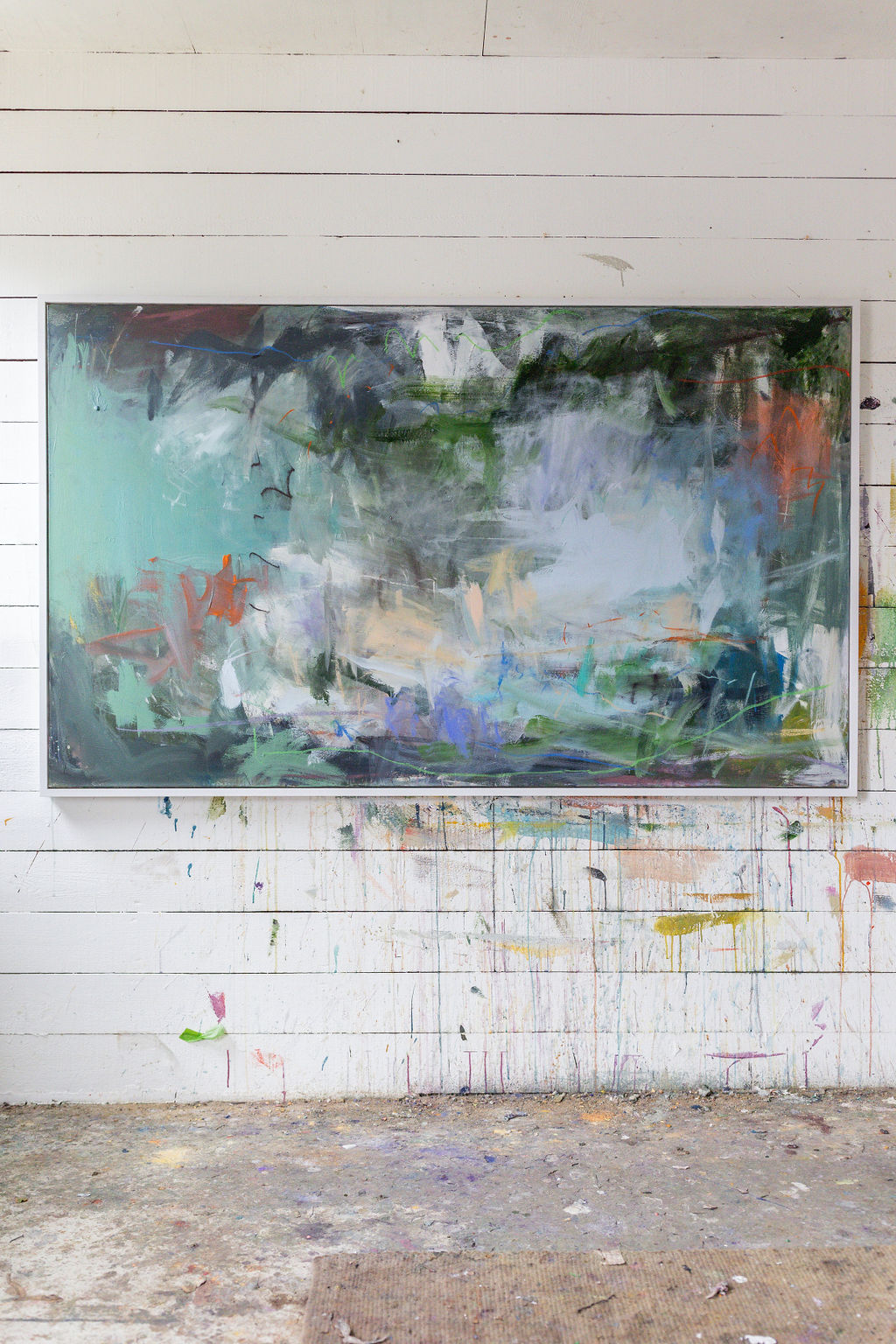
Q: Could you walk us through your creative process, from initial inspiration to the finished piece?
Inspiration is everywhere for me. I know it sounds cliché, but I can’t help it—I see things that others might not notice, like a reflection in a puddle or the way shadows shift throughout the day. I don’t actively seek inspiration; it just happens. It’s part of how I live. If I ever feel stuck, I step outside, go for a walk, or visit a gallery to refresh my perspective. Colour, light, and movement constantly feed into my work, often in ways I don’t realise until I’m painting.
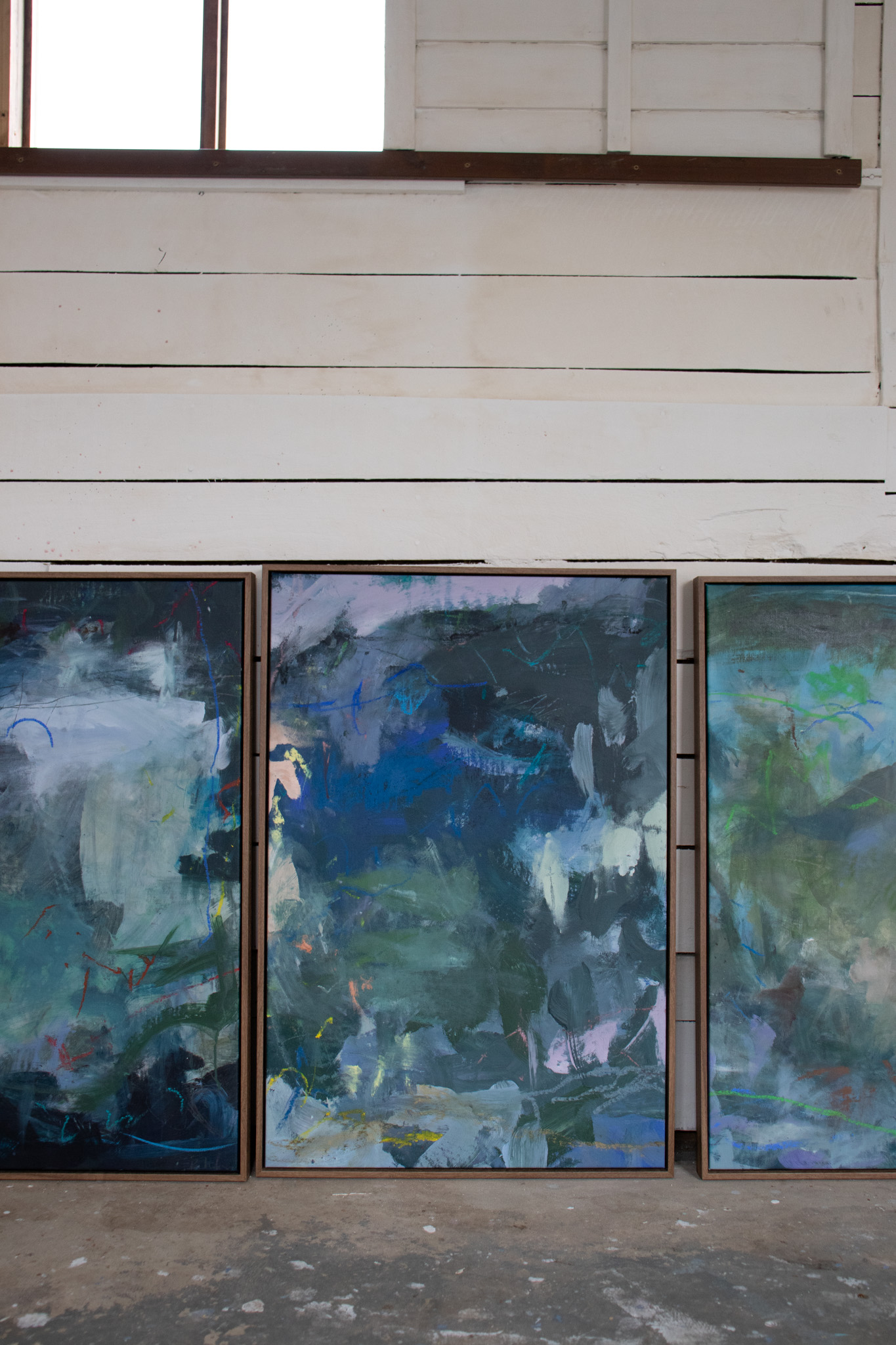
When I get into the studio, I start by mixing a few colours—it’s never planned, just instinctive. I prefer working on unstretched canvas because it feels freer; I’m not confined by pre-set dimensions, and the lack of defined edges makes the process more challenging but also more rewarding. Once a piece is finished, I send it off to be stretched, which gives me space to step back before making any final adjustments. My workflow usually consists of two-hour bursts, broken up by tea, a dog walk, or a change of pace. Music is essential—it keeps my energy high and fuels the rhythm of my painting. If I need to slow down and think differently, I switch to a podcast or the radio. But silence? Never. I’d overthink everything.
Q: Your work has been described as a blend of impulsive, energetic mark-making and softer, looser gestures. How do you balance these elements in your compositions?
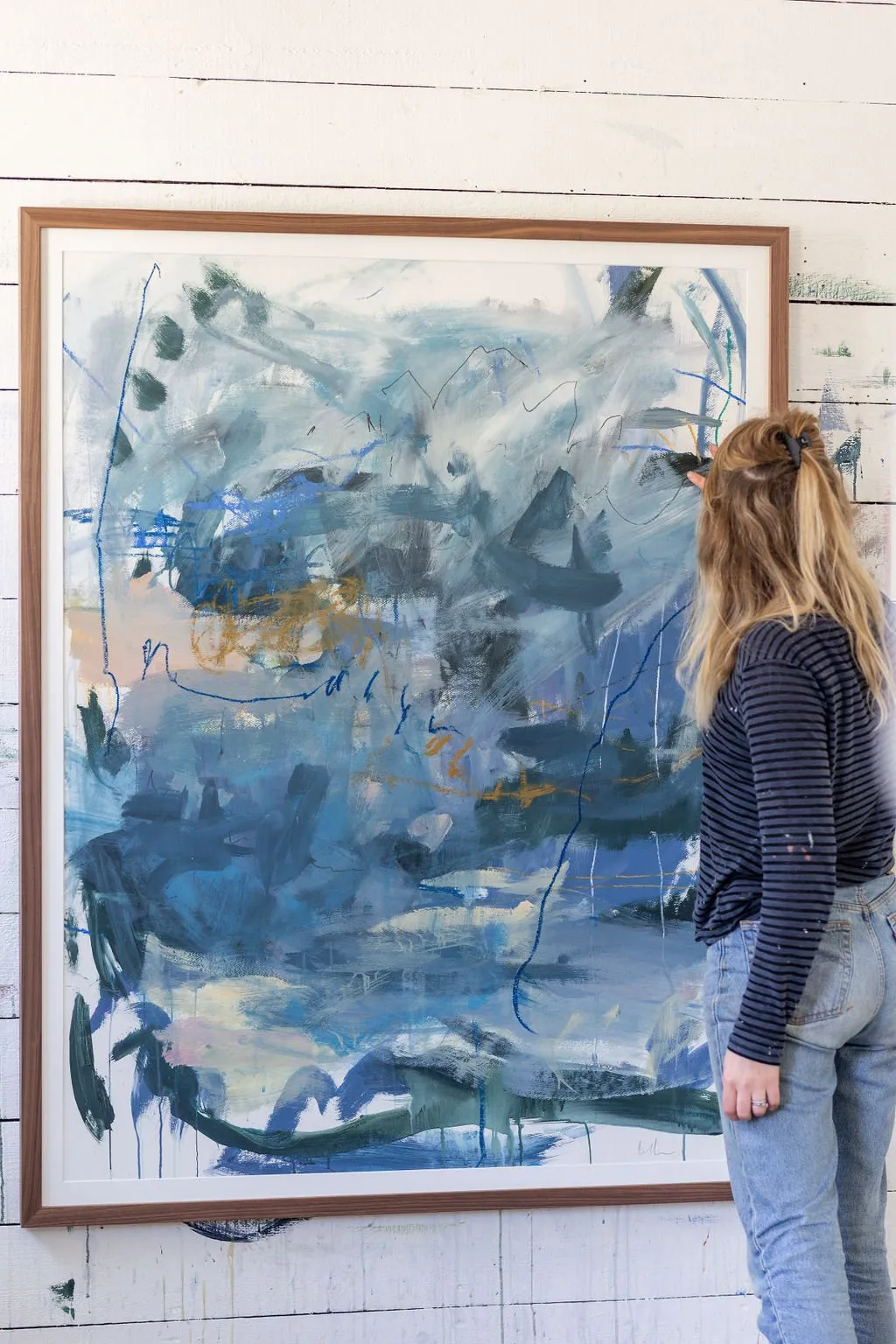
I never plan a painting—it just evolves. It starts energetically, almost chaotically, with instinctive, impulsive marks. Colour often leads the way; I’ll suddenly feel like a piece needs a burst of something—maybe a pop of mustard, maybe a deep blue—and that choice will spark the next move. The process slows as the painting develops. I become more careful, more considered, but I’m always conscious of keeping the energy alive.
I never want a painting to feel too safe. Towards the end, if it feels too restrained, I might grab a big brush and make a bold, sweeping mark—something unexpected that brings strength and bravery to the composition. Lately, I’ve been drawn to incorporating more lines, almost lightning-like shapes. I’m not entirely sure where that’s coming from, but I’m rolling with it. That’s the beauty of painting—you follow where it takes you.
Q: When you look back your early work, how has your artistic practice evolved over time?
My work now is bolder, stronger—more confident. That’s definitely the word. When I look back at my early paintings, I can see how much more tentative I was, almost holding back. I remember doing so many neutral paintings, convinced that was the direction I should go in. But now, that feels so far from where I am. Colour has become such a defining part of my work—it leads everything.
I also think I’m more determined now. There’s a sense of “this has to work,” and I’ll push until it does. Becoming a mother has played a big role in that. It’s given me a new kind of focus, a stronger connection to both my work and myself. But the art world still operates in a way that makes you feel like you have to depersonalize things—you have to be careful how you frame certain experiences. And that’s frustrating. But ultimately, I feel more in tune with my practice than I ever have before.
Q: The art world is continually evolving. What emerging trends or directions do you find most intriguing currently?
The art world is always shifting, but I think the biggest thing right now is how much more responsibility is on the artist to do everything—it’s not just about making work anymore. You have to be strategic about how you present it, how you show up on social media, and how you build connections. It’s exhausting, to be honest, and sometimes it feels like that side of things takes up just as much time as actually painting.
I do pay attention to what other artists are doing, and I find inspiration in that, but the industry can be brutal. There’s this constant pressure to be visible, but also to be really careful about how you’re visible. If I don’t post on Instagram for a few weeks, the algorithm punishes me, and suddenly my work isn’t being seen by the right people. But if I do post, it has to be polished.. It’s such a fine line to tread.
I’ve definitely shifted more toward working with galleries, because they can reach collectors I’d never reach on my own, and it gives me a bit more space to actually focus on painting.
Q: We have really enjoyed working with you on the Miiro London project. We believe art plays a crucial role in luxury hospitality settings. In your opinion, what impact does art have in these environments?
The Miiro London project has been such a brilliant experience, and it’s been really exciting to see my work in a setting like that. Art in luxury hospitality completely transforms a space—it elevates it, makes it feel intentional, personal, and unique. When a hotel invests in real art, rather than generic prints, it shows a level of care and curation that guests can feel. It’s like the difference between a space that’s just been decorated and a space that’s been designed—there’s a soul to it.
From an artist’s perspective, projects like Miiro are invaluable. It’s a different dynamic from selling to private collectors—not just in terms of managing workload and revenue, but also in giving paintings a new life in an environment where they really fit. Some of the works selected for Miiro had been with a gallery and hadn’t found the right home yet, but here, they sit perfectly. The juxtaposition of contemporary artwork in a luxurious hotel setting can create such an interesting energy—it stops the space from feeling too predictable.
That’s something I feel strongly about: art in these environments shouldn’t just be a quiet, elegant addition that blends into the walls. It should sing. It should bring the whole space together, make it feel alive, and give it a real identity. With Miiro, everything has been so carefully considered—from the interiors to the framing—and that makes all the difference. It’s not about just filling a space with art, it’s about making sure the art makes the space. And when that’s done right, you can really feel it.
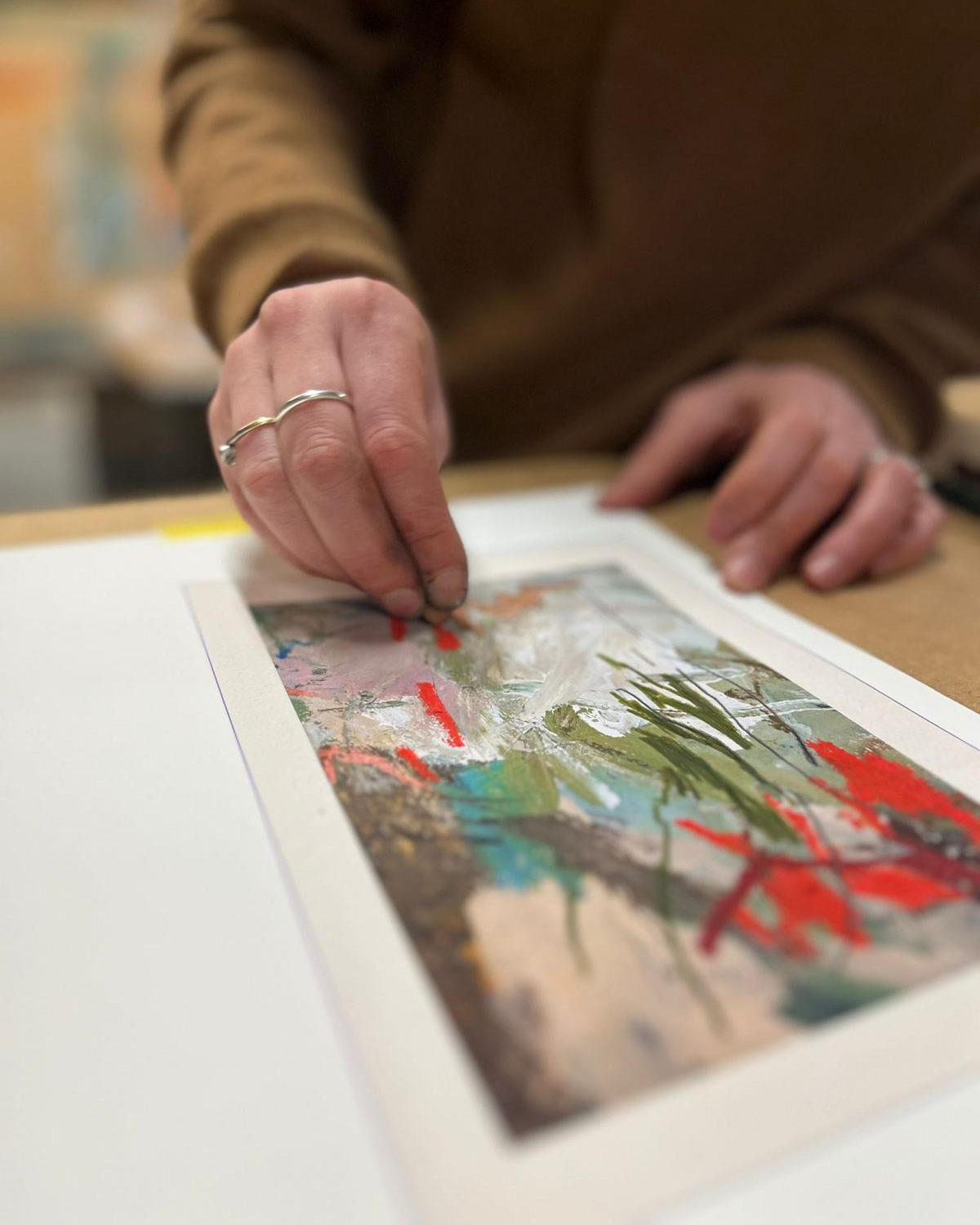
For her latest project with Artstory, Bethany was commissioned to create several original paintings for the public spaces alongside a series of limited-edition prints for the guest bedrooms at Miiro London, Templeton Gardens— Miiro’s first hotel in the UK, set to open in late spring 2025.